


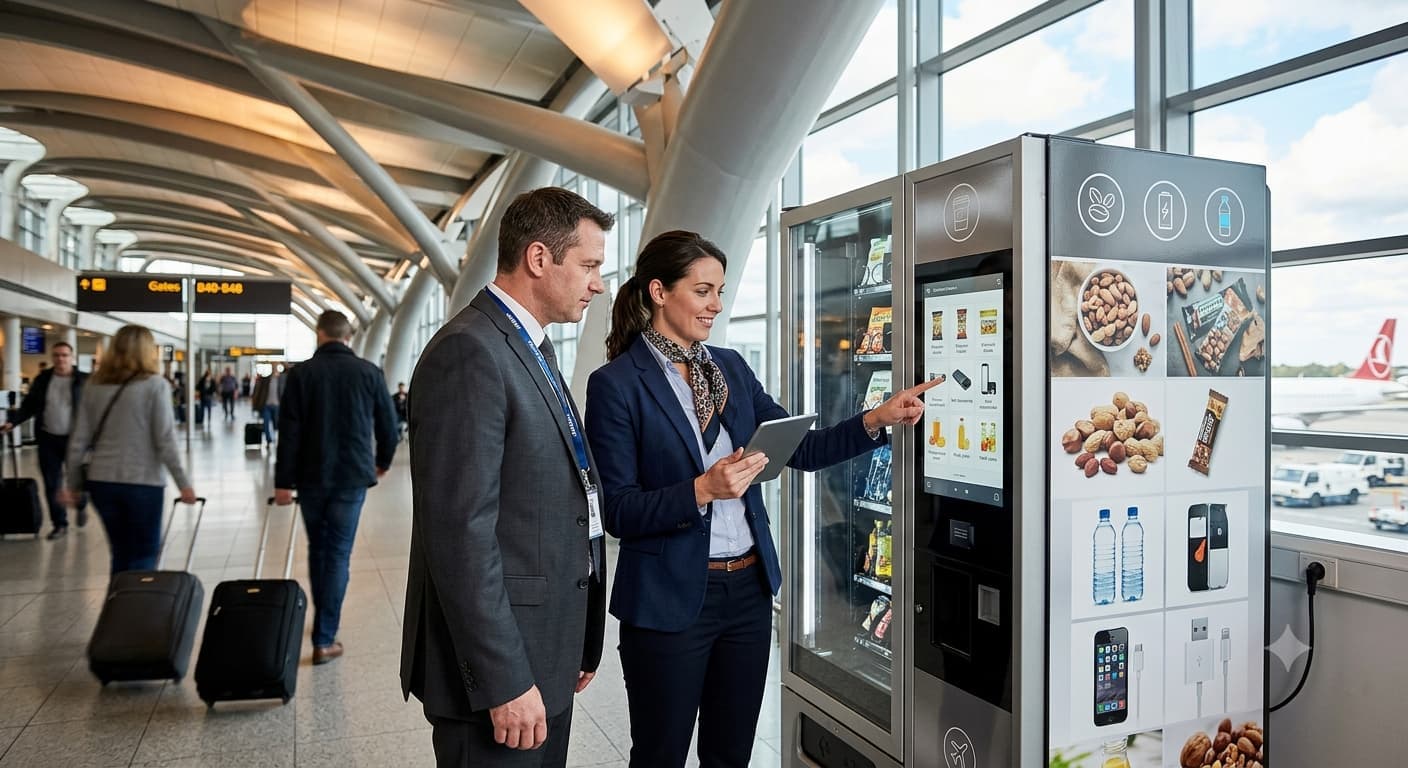
A vending machine can stand in the busiest transport hub in the city and still struggle to generate sales. Many operators assume that high foot traffic guarantees a profitable asset, but placing hardware inside an aviation facility involves looking past basic passenger numbers. True viability depends on the friction of passenger habits. When a traveler is running late, anxious about security, or struggling with luggage, their brain filters out everything except what is immediately useful and effortless.
A traditional retail storefront inside a terminal carries immense operational pressure. High square-meter rents and the constant logistical headache of staffing 24-hour shifts quickly drain margins. Automated hardware bypasses these financial barriers because it functions inside a highly compact footprint. When a terminal operates smoothly, capturing consistent transactions becomes predictable. Partnering with professional vending machine suppliers in UAE helps commercial concession operators secure industrial-grade equipment tailored to handle continuous, heavy public interaction.
Why Airports Are Ideal Locations for Vending Machines
A transit concourse is a self-contained economic ecosystem where passenger density remains remarkably steady. Commuters are effectively a captive audience navigating terminal corridors under a strict time budget, frequently experiencing sudden hunger or dehydration. They rarely have twenty minutes to wait in a slow queue at a traditional cafe or checkout counter.
The financial performance of these assets is heavily driven by instant gratification. While a standard street location relies on casual foot traffic, terminal placements capture travelers who are already in a spending mindset. Flight schedules allow you to map out your transaction volume with high precision. By deploying robust, heavy-duty assets in high-visibility zones, an operator transforms empty floor space near a departure gate into a lean revenue stream.
Researching the Right Airport for Your Business
Not every aviation hub offers the same commercial viability. A massive international terminal processing forty million passengers annually presents entirely different operational parameters than a regional domestic airport. Before drafting a business proposal, you must analyze specific passenger metrics, including average layover durations, peak flight times, and the existing distribution of traditional retail kiosks.
Longer dwell times directly correlate with higher sales. When a passenger is stranded during a three-hour international layover at midnight, their reliance on unattended retail platforms spikes significantly. Conversely, a terminal that primarily handles rapid, short-haul commuter flights requires a different inventory strategy focused entirely on instant grab-and-go convenience. Gathering this foundational data ensures your initial market entry aligns with actual traveler behavior.
Contacting Airport Authorities and Management
Placing commercial hardware inside a public transit facility requires navigating a formal regulatory framework. You cannot approach a terminal manager with a verbal request. Instead, you must locate the specific commercial leasing or properties department responsible for non-aeronautical revenue. Most international transport hubs manage these assets through structured third-party concession programs or dedicated facility management firms.
Your initial inquiry must be formal and data-backed. You are establishing your business as a capable vendor that adds value to the passenger experience without complicating terminal operations. Expressing a clear understanding of airport logistics from the first point of contact sets a professional tone, separating your enterprise from casual operations.
Applying for Airport Concession Opportunities
The selection process for terminal space is typically governed by a Request for Proposal or a public tender system. When an authority opens a concession slot for automated retail, operators must submit a comprehensive business plan that outlines operational capabilities, equipment dimensions, and revenue-sharing models.
Your proposal must demonstrate absolute operational resilience. Authorities want to see that your logistics team can maintain and stock the equipment without disrupting passenger traffic or violating terminal protocols. This is where your choice of machinery matters. Proposing a reliable framework like the FAS 750 business vending machine proves to the selection committee that your business utilizes reliable hardware built for high-volume commercial environments. Winning the contract depends heavily on proving that your system can run autonomously with minimal downtime.
Also read: Vending Machines in Metro Stations
Choosing the Best Products to Sell in Airport Vending Machines
Inventory selection inside a secure terminal zone must be driven entirely by sales data analytics rather than personal intuition. In an environment centered around travel, consumer buying habits split into distinct, urgent categories.
A twenty-minute reduction in the school run or commute sounds small on paper, but over a year it changes how a person experiences transit. The same logic applies to airport retail. Universal charging cables, international wall adapters, and basic earbuds sell exceptionally well near boarding gates where passengers suddenly realize they forgot essential gear. Travel-sized hygiene kits, sanitizers, neck pillows, and simple over-the-counter motion sickness remedies satisfy immediate physical discomfort. Chilled water, electrolyte drinks, and high-protein snacks cater to time-sensitive travelers skipping terminal dining.
Introducing a specialized snack vending machine layout allows you to offer a balanced mix of shelf-stable refreshments and quick alternatives. The specific detail that drives conversion rates is prioritizing globally recognized, high-trust brands. A passenger rushing to a gate will not risk their money on unfamiliar novelty goods. That difference matters. They choose a product they recognize instantly.
Selecting the Right Type of Vending Machine
Public infrastructure demands physical materials that withstand rigorous, continuous use while keeping internal inventory perfectly preserved. Standard light-duty equipment will quickly fail under the punishing demands of a 24-hour terminal environment. Your hardware selection must focus on reinforced steel bodies, anti-vandalism engineering, and advanced internal programming.
To manage a diverse inventory of sensitive products safely, deploying a 750 EXCELLENCE vending machine gives operators modular tray configurations that can be customized to fit everything from fragile electronics to chilled beverages. If your concession contract covers an area experiencing intense passenger spikes during peak international arrival windows, installing a high-capacity FAS 1050 PRO vending machine provides a spacious layout designed for rapid product turnover and minimal out-of-stock indicators.
For environments where fresh snacks or perishable items are introduced into the terminal footprint, utilizing modern food vending machines ensures your cold-chain logistics remain intact. These advanced systems feature electronic temperature controls and internal lift mechanisms that lower fragile packaging gently to the retrieval area, protecting product integrity and reducing mechanical malfunctions.
Also read: The Latest Vending Machine Technology
Finding the Best Locations Inside the Airport
A machine will fail to perform if it stands in a commercial dead zone. Maximizing your transaction volume requires securing space within high-visibility, high-dwell areas where passengers naturally congregate or experience a delay in their journey.
International departure gates work well because passengers sitting in boarding lounges for extended periods are highly susceptible to impulse purchasing. Arriving travelers waiting for luggage in baggage claim alcoves often look for quick hydration or a fresh snack after a long flight. Similarly, the corridors leading toward airport taxi ranks, metro stations, and car rental desks capture consumers transitioning back into the city.
Securing these prime locations requires a deep understanding of terminal layout. Working alongside experienced vendors for vending machines helps you identify underutilized alcoves and structural pillars that can be transformed into highly efficient, self-service retail stations.
Security and Compliance Requirements for Airport Vendors
Operating inside an aviation facility means your business must comply with strict state and international security protocols. Every piece of hardware deployed past the central security checkpoint must undergo rigorous screening and safety certifications. The internal components, electrical wiring, and cooling systems must meet institutional fire-safety and build-quality standards.
Furthermore, your restocking personnel must clear background checks to secure airport security badges. This security barrier is why your operational framework must be highly organized. You cannot send technicians into secure zones on random schedules. Your machinery must be equipped with advanced telemetry remote management platforms to monitor your internal inventory levels and coin mechanisms in real time, minimizing the number of physical security entries required each week.
Also read: Top high traffic locations for vending machines
Maintaining and Restocking Airport Vending Machines
Terminal logistics require a precise, data-driven maintenance routine. If a machine suffers an internal bill validator jam or runs out of its top-selling drink selection during a weekend travel rush, your revenue drops instantly while consumer trust breaks down.
Transitioning to a highly reliable Soda Lemon vending machine setup addresses these operational risks by incorporating intelligent fault diagnosis alerts directly into the operating system. When the cloud-based dashboard indicates a mechanical fault or a low-stock threshold, your team is notified immediately. This allows your staff to prepare the exact inventory needed before clearing terminal security, creating an incredibly efficient delivery route and eliminating wasted operational hours.
Tips for Maximizing Profit from Airport Vending Machines
Maximizing your profit margins inside a busy transport hub requires removing every point of psychological and physical friction from the purchase process. Modern international travelers rarely carry pockets full of local coins or paper currency.
Your system must accept international credit cards, mobile wallets, and contactless cards to survive. Place high-margin items directly at eye level to capture immediate attention during rush hours, and keep the internal LED lighting crisp and the safety glass pristine to ensure maximum visibility. Integrating an advanced FAS Cashback vending machine framework into your transit network ensures that even cash-preferred travelers are handled smoothly, providing digital change options and multi-currency compatibility. By eliminating payment barriers, you ensure that buying a quick refreshment or a travel accessory becomes an effortless habit that passengers repeat every time they pass your gate.
Also read: The Evolution of Luxury Vending Machines
Conclusion
True commercial growth in unattended retail does not come from scattered, unmonitored placements. It comes from deploying highly resilient machinery within high-traffic public ecosystems where location, product mix, and user experience work together. When you stop viewing automated retail as just a collection of standalone boxes and start treating it as an enterprise asset, you unlock a predictable path to scale. Speak with Soda Lemon to identify the right vending setup for your business and turn empty transit floor space into a reliable, self-service retail solution.
FAQs
How do I get permission to put a vending machine in an airport?
Permission is secured by submitting a formal business proposal or bidding through a public tender process managed by the airport's commercial leasing or properties department.
Can anyone place a vending machine in an airport?
Any legally registered business that meets the airport authority's operational capability standards, financial requirements, and security clearance protocols can apply for a concession contract.
Is putting a vending machine in an airport worth it?
Yes, airport placements are highly lucrative because they offer an exceptionally stable, round-the-clock audience of high-intent consumers facing strict time constraints.
How much does it cost to place a vending machine in an airport?
The cost varies based on the terminal's passenger volume. It typically includes the upfront purchase of industrial-grade hardware, security licensing fees, and a monthly lease structure or revenue-share percentage paid to the airport authority.
Are airport vending machine locations profitable?
Yes. Because they operate within a tiny physical footprint with zero on-site employee wages and minimal operational overhead, their net profit margins per square meter are significantly higher than traditional retail stores.
Can small businesses place vending machines in airports?
Yes, provided the small business possesses the logistical infrastructure to guarantee consistent restocking, real-time telemetry tracking, and strict adherence to terminal security protocols.
What products sell best in airport vending machines?
The top-performing items split into urgent categories: chilled mineral water, energy beverages, travel electronics, personal hygiene kits, and fresh grab-and-go food items like sandwiches.
Also read: how to get permission to put a vending machine somewhere