


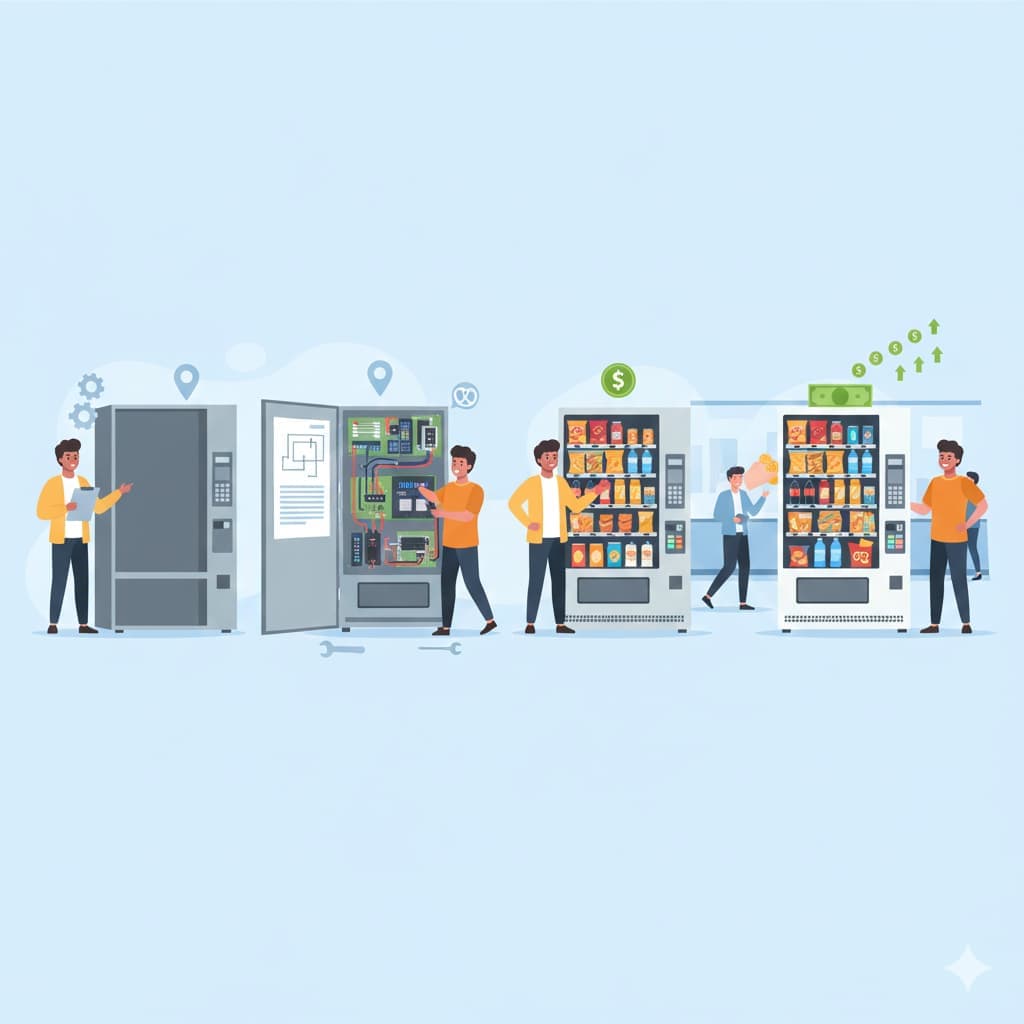
Starting a vending business is one of the simplest ways to earn passive income, but many beginners struggle with the initial steps. Understanding how to set up a vending machine correctly from the start determines whether your business becomes profitable or frustrating. From choosing the right model to installation, licensing, payment systems, and efficient management, this guide explains everything you need to launch smoothly and confidently without missing any important step.
The Planning & Preparation Phase
Before diving into the technical aspects of how to set up a vending machine, every successful operator begins with thorough planning. Your success depends heavily on choosing the right concept and preparing for every element of the business. The first step is studying the market. Every location has customers with unique needs. People in offices commonly buy snacks, chocolates, and energy boosters, while visitors in hospitals prefer drinks, water, or healthier options. Gyms, on the other hand, often generate better sales with protein snacks or cold beverages. Understanding who will use the machine helps you choose what to sell and where to place it. The ability to identify unmet demand is often what separates profitable operators from beginners who struggle to generate revenue.
Planning your budget is the second essential step. Machines vary from low-cost refurbished units to high-end new models with cashless systems. You must consider the cost of the machine, the initial stock, transportation and delivery, permits, licenses, payment system installation, ongoing maintenance, and insurance. Clarity at this stage saves you from unexpected expenses later and helps you make confident decisions about machine selection and location agreements while preparing the foundation for learning how to set up your own vending machine in a professional way.
How to Set Up a Vending Machine
This is the phase where beginners truly understand how to set up a vending machine from selection to installation.
Selecting the Right Vending Machine
Choosing the right machine is a make-or-break decision. Snack machines are ideal for schools, offices, and corporate environments where customers want quick energy. Drink machines work best in gyms, manufacturing sites, hospitals, and high-traffic commercial areas where hydration is essential. Combination machines provide both snacks and drinks in one unit and are perfect for small spaces or locations with diverse preferences.
Some operators choose specialized equipment such as ice cream vending, electronics vending, or personal protective equipment vending depending on traffic type. If you are unsure how to setup vending machine options, starting with a simple snack or drink machine is the safest approach. Once you gain experience and understand your customers, you can invest in more advanced or specialized models.
Another key decision is whether to buy new or used. New machines come with warranties, energy-efficient systems, and modern technology, which reduces the risk of breakdowns. Used machines are more affordable but may require upgrades or repairs. This decision depends on your budget, your goals, and how quickly you want to scale your business.
Delivery, Placement, and Installation
After selecting your machine, the next step in understanding how to set up a vending machine is planning the delivery and installation. Vending machines are extremely heavy, so preparing the location before delivery is essential. Doorways, hallways, and elevators must be measured accurately to prevent complications. Clearing a path to the final position ensures a smooth delivery without risk of damage.
The placement of the machine directly affects sales. A successful vending machine must be visible, easily accessible, and located where people naturally pass by. Placement in hidden corners or remote hallways reduces revenue dramatically. A proper position near common areas, waiting zones, or break rooms increases exposure and improves customer engagement. Power access is crucial as most machines require either a 110–120V outlet or a 220–240V outlet depending on the country. The outlet must be close enough to avoid long cords, which may create hazards or violate safety guidelines.
Once the machine is placed, you move into the mechanical and configuration process. This is where many beginners fully understand how to set up vending machine functions. The first step is powering the machine, ensuring the cooling or heating systems activate, and waiting for internal temperature stabilization if it is a drink or perishable-product machine. Product channels and spirals must be adjusted to match the size and weight of your items. Prices are programmed individually through the interface. Every product should be tested to confirm smooth dispensing. A machine that mis-vends or fails to dispense items reliably will generate complaints, discourage customers, and harm your reputation.
Licensing, Permits, and Insurance
No vending business is complete without legal compliance. While learning how to set up a vending machine, many new operators overlook the importance of paperwork. Nearly all cities require a business license to operate legally. Additionally, a written agreement with the location owner protects both sides. This agreement clarifies access rights, operational responsibilities, commission percentages, and machine placement duration. Clear terms eliminate future disagreements.
Depending on local regulations, food and beverage permits may be required. Some areas have health inspection guidelines to ensure the machine meets hygiene standards. Regular cleaning and temperature control are often part of compliance requirements. Insurance is equally important, especially liability coverage, which protects you if someone claims injury near your machine. Equipment insurance protects your investment from vandalism, theft, or accidental damage. Many building owners will not allow installation without proof of insurance, making it a mandatory part of setting up the business.
Operations and Maintenance
Understanding how to set up a FAS 750 business vending machine is only the beginning; the real success comes from consistent management. The most important task is restocking. The frequency depends on how busy the location is. Some machines need visits twice a week, while others require only one visit every ten days. The products that sell fastest must always remain available because empty shelves directly reduce profits. Operators who monitor demand patterns and adjust their inventory earn significantly more than those who restock everything equally.
Maintaining cleanliness is essential for reputation and sales. Customers hesitate to buy from a dirty or dusty machine. Wiping the display, cleaning the coin slot, checking the tray area, and removing fingerprints help maintain a professional appearance. Clean machines generate trust and repeat customers.
Payment systems are another crucial part of daily operations. Learning how to set up credit card on FAS 1050 Excellence vending machine is one of the smartest steps you can take to increase income. Cashless payment systems usually integrate card readers, tap-to-pay technology, and mobile payment options. Installing them involves connecting the device to the machine, activating the merchant account, programming the pricing, and testing each feature. Machines equipped with both cash and cashless systems consistently outperform cash-only machines.
Inventory tracking is another pillar of efficient management. Most modern vending systems offer software that monitors product levels and sales patterns in real time. When operators analyze this data, they can eliminate slow-moving products, add more of the popular items, and maximize profit margins. Real tracking helps you understand not only what to stock but also how often to visit each location.
Maintenance is also essential. Anyone learning how to setup FAS 750 Advanced vending machine operations must understand how to address minor issues such as coin jams, bill acceptor malfunctions, and stuck spirals. Many problems can be resolved quickly after basic training, preventing downtime and complaints. Regular inspections help prevent larger mechanical failures and keep the machine operating smoothly year-round.
Scaling Your Vending Business
Once you have mastered the basics of how to set up a Soda Lemon vending machine, the next step is scaling your business. Most successful operators begin with one or two machines, learn from real experience, and expand gradually. Growth comes naturally once you identify profitable patterns and build strong relationships with location owners.
Adding more machines increases revenue and provides opportunities to negotiate better agreements. Improving your product selection is equally important. Introducing healthier snacks, premium beverages, or seasonal items can attract new customers. In high-traffic areas, even small changes in product mix can significantly increase weekly sales.
Finding better locations is the most powerful scaling strategy. Office buildings, universities, fitness centers, hospitals, and busy commercial sites offer substantial earning potential. As your business grows, modernizing your machines with cashless readers, inventory software, and energy-efficient systems enhances convenience and reduces operational workload. Many operators eventually hire restocking assistants to save time and focus on expansion.
Read also: start vending machine business in uae
Conclusion
Learning how to set up a vending machine from vending machine suppliers in uae gives you a complete roadmap to launch a profitable business with minimal risk and long-term passive income. With proper planning, strategic placement, the right machine choice, and consistent operational management, vending can become one of the most rewarding small businesses. Your success depends on commitment, organization, and the willingness to monitor trends closely. Now is the perfect time to begin your vending journey. If you are ready to start, use this guide as your launch plan and take the first step toward building a steady income stream.
FAQs
What is the most profitable type of vending machine?
The most profitable machines are usually drink or snack machines placed in locations with steady foot traffic. In some environments, specialized machines such as coffee or healthy vending machines can outperform traditional options when positioned strategically.
How much time does it take to manage one vending machine per week?
Most operators spend between fifteen and thirty minutes per week on restocking and maintenance, although very busy locations may require slightly more attention.
How do I find a good location for a vending machine?
A good location is one with consistent daily movement, such as office buildings, gyms, hospitals, universities, or manufacturing sites. Observing foot traffic trends before placing your machine helps determine the potential demand.
How often should I restock my vending machine?
Restocking depends on sales volume. Most machines require one or two visits per week. Highly active spots may need more frequent visits, especially if drinks or popular snacks sell out quickly.
What should I do if the vending machine breaks down?
The best approach is to diagnose the issue by checking the power, sensors, bill acceptor, coin mechanism, and cooling system. Many issues are simple to fix. For more complicated problems, contacting a qualified technician ensures quick recovery.
Do I need special insurance for a vending machine?
Yes, liability insurance protects you if someone gets injured near your machine, while equipment insurance covers damage, theft, or vandalism. Many property owners require proof of insurance before allowing installation.
Also read: The Benefits of Hot Vending Machines in Workplace Environments